
Research Article: Journal of Drug and Alcohol Research (2026) Volume 15, Issue 3
The Role of Effective Project Management Strategies in Transforming Pharmaceuticals Operations during Drug Deliverables
Ratnakar Aryasomayajula*, Adinarayana UV and Kolli Srinivas RaoRatnakar Aryasomayajula, Department of Operations and Supply Chain, GITAM School of Business, GITAM (Deemed to be University), Rushikonda, Visakhapatnam, India, Email: ratan.aryasomayajula@gmail.com
Received: 04-Feb-2026, Manuscript No. JDAR-26-189507; Editor assigned: 06-Feb-2026, Pre QC No. JDAR-26-189507 (PQ); Reviewed: 20-Feb-2026, QC No. JDAR-26-189507; Revised: 18-Mar-2026, Manuscript No. JDAR-26-189507 (R); Published: 25-Mar-2026, DOI: 10.4303/JDAR/236501
Abstract
Background: Effective project management is essential for optimizing pharmaceutical operations by enhancing efficiency, ensuring regulatory compliance, and minimizing project delays. Although progress in the business, ineffective project execution continues to pose a substantial barrier. Agile, Lean, and Six Sigma are structured project management approaches that have the potential to enhance operational performance, simplify processes, and promote decision-making in pharmaceutical project management.
Aim: In particular, this study aims to assess how Agile, Lean, and Six Sigma methodologies affected the timeliness, cost-effectiveness, quality, and conformity with regulations of pharmaceutical projects. Additionally, the study delves into the ways in which interdisciplinary teams may work together to enhance project results and facilitate informed decision making.
Method: The research used a quantitative methodology, examining data from 341 people within the pharmaceutical sector. Statistical analysis is performed using SPSS, using regression methods to assess the correlation between project management strategies and key performance metrics. This study provides actual evidence that structured project management approaches may enhance pharmaceutical operations.
Conclusion: The study results indicate that Agile, Lean, and Six Sigma techniques substantially influence pharmaceutical project management by enhancing deadlines, cost efficiency, quality, and regulatory compliance. The statistical study verifies that structured project management methodologies improve decision-making, risk management, and interdisciplinary cooperation, eventually resulting in increased project success. The research underscores the need of using contemporary project management methodologies to enhance efficiency in pharmaceutical operations. Subsequent research may enhance this by integrating new technologies like AI and automation to further refine project execution to tune better public health effect.
Keywords
Introduction
Background of the study
Medication and medical equipment are examples of pharmaceutical commodities that are the focus of pharmaceutical industry research, development, production, and marketing. Medications are subsequently provided to patients, or self-administered, for the purpose of treating or preventing disease, or relieving symptoms of illness or damage. Pharmaceutical firms may engage in the production of generic medications, branded pharmaceuticals, or both, in various settings. Generic materials lack intellectual property protection, while branded materials are safeguarded by chemical patents. The industry’s many branches encompass specific domains, including biologics manufacture and complete synthesis. Regarding the marketing, safety evaluation, effectiveness testing, and patenting of these medications, the industry is subject to a number of rules and requirements. Global pharmaceutical sales in 2020 produced $1,228.45 billion worth of therapies. In 2021, the industry’s Cumulative Annual Growth Rate (CAGR), accounting for the effects of the COVID-19 pandemic, was 1.8%. The pharmaceutical sector is acknowledged in the “UN Millennium Development Goals” as a key contributor to economic growth. This industry is recognized as one of the most technologically advanced and capital-intensive [1]. It is The “life line” industry relies on its goods to reduce disease-related pain. It strengthens the economy by producing employment and increasing export revenues. This industry distinguishes itself by producing things that cannot be substituted.
Indian pharmaceuticals have grown at higher rates than the world average during the last several decades. During this era, India has emerged as the foremost exporter of medicines globally and in Russia [2]. The progress of the pharmaceutical industry is essential for ensuring a dignified life for everyone worldwide, as well as for achieving United Nations development goal which aims to “Ensure healthy lives and promote well-being for all at all ages.” Approximately two billion persons are devoid of access to essential medications listed by the WHO. This statistic indicates that 80% of the world population lives in nations with restricted or non-existent access to sanctioned analgesic drugs. As a result, the global community’s interest in medications has grown throughout the past two decades. The current epidemic has emphasized the fundamental connection between public health and economic growth. In 2020, the global economy contracted by 4.3% as a result of the enforcement of restrictive measures in reaction to the coronavirus pandemic. Simultaneously, the epidemic has heightened the discussion around the imperative of ensuring Human rights to physical and economic access to essential breakthroughs for maintaining life and health. In contrast, the business motivation of pharmaceutical manufacturers has become a central issue of dispute.
India, a global leader in the market for low-cost generic medicines, has planned to double its pharmaceutical market by 2024 to a value of 130 billion US dollars. This encompasses Indian drug companies that seek to take advantage of the growth in production with drugs whose patents are set to expire in the coming decade. Russian scientific journals have discussed such critical topics related to the Indian pharma industry as import substitution, drivers of regulation for BRICS country growth, and the Indian economy at large.
Role of project management in the pharmaceutical industry
The project manager in the pharmaceutical industry plays a crucial role in strategizing and implementing an organization’s marketing strategy for products [3]. They handle all aspects of product marketing, from pre-launch and launch campaigns to post-launch. Each product in the industry goes through four phases: Marketing product management is crucial throughout the introduction, growth, saturation, decline, or steady period. Effective project management must provide cost-efficient planning, improved business processes, efficient resource allocation and utilization, while simultaneously uniting all crossfunctional project contributors to achieve the project objective. The management method of pharmaceutical projects comprises five essential stages, which are similarly used in project execution across all other sectors. However, project management within the pharmaceutical sector has an additional uniqueness. Due to the considerable uncertainty in the pharmaceutical sector, it is essential to establish an efficient system for comparing a substantial number of projects to quickly select those that are desirable to pursue [4]. To reduce potential challenges in the comprehensive execution of all project stages, project management in this sector employs portfolio administration. The methodical evaluation of a project based on a variety of factors is known as portfolio management, aiding the decision-making process and enabling comprehensive project execution by aligning it with R&D plans. Portfolio management may use several techniques; But the AID analysis (Attractiveness- Difficulty Implementation analysis) is the one most often used in prescription drugs.
Trends in pharmaceutical research and development
The pharmaceutical sector invested $83 billion in research and development in 2019, covering activities like drug discovery, product development, and clinical testing. This is 10 times higher than the 1980s, after inflation effects [5]. R&D currently accounts for more than 25% of pharmaceutical companies’ revenues, about twice as much as it did in 2000. This indicates that the percentage of revenues spent on R&D has also increased. This revenue share is greater than that of other knowledge-based companies, such as semiconductors, technology gear, and software. From 2010 to 2019, the FDA authorized 38 new pharmaceuticals yearly, a 60% increase from the preceding ten years. The number of new drugs approved annually has also increased.
Market access
Market access, which includes the complete process of making a pharmaceutical product accessible to patients at the appropriate time and price, is a critical component of the pharmaceutical business. It entails a number of actions to guarantee that patients may get the necessary treatments. Market access in pharma includes pricing and reimbursement [6]. It is an important stage in a product’s lifetime and often dictates its level of commercial success. The failure of a product to reach prospective customers without appropriate market access strategies may result in lost revenue and missed chances to enhance patient health outcomes. The point of getting into a market is to provide the right product for the right client at the right time at the right price. It’s not simply about bringing a product to market. A vital component of contemporary healthcare, it guarantees that patients get cutting-edge therapies, thereby enhancing their health and quality of life on a global scale.
Global market access in the pharmaceutical industry involves ensuring products are accessible to patients worldwide, navigating complex regulatory environments, healthcare systems, reimbursement policies, and cultural nuances [6]. Understanding the distinct healthcare environment of each nation, adjusting pricing and reimbursement plans appropriately, and determining how a product might address unmet medical needs are all components of a successful approach. It’s possible that various nations may pay differently for novel therapies or more stringent costeffectiveness standards. Determining the product’s pricing and commercial viability also requires an understanding of the worldwide illness load. Global market access for pharmaceuticals is a difficult task that calls for strategic planning, knowledge of regional healthcare systems, and the creation of a price plan that strikes a balance between accessibility and financial success.
Market access challenges in the pharma industry
The pharma industry faces numerous challenges in market access, including pricing, regulatory environment, costeffectiveness, and health technology assessment. Market access depends heavily on pricing, which requires a thorough grasp of the drug’s worth, the competitive environment, and payer willingness to pay [7]. Every nation has its own set of rules and criteria, adding another layer of complexity to the regulatory landscape. Another difficulty is the growing need for cost-effectiveness as well as Health Technology Assessment (HTA), which forces businesses to make investments in the creation of data and evidence. The emergence of advanced treatments and customized medicine brings with it new difficulties since it may be difficult to prove their worth to payers and because the efficacy of these treatments might change depending on the patient subgroup. The pharmaceutical sector is very competitive, thus there must be constant innovation and distinction, which calls for a thorough comprehension of the market, rivals, and patient demands.
The growing intricacy of pharmaceutical projects, with rigorous regulatory mandates and shifting market conditions, has shown the inadequacies of conventional project management methodologies. Traditional techniques, like the Waterfall model, often fail to address the uncertainties intrinsic to drug development, resulting in delays, budget overruns, and inefficiencies in the market introduction of life-saving treatments. Pharmaceutical companies have challenges with pricing, market access, and regulatory compliance, which calls for the creation of more adaptable and effective project management systems. Agile and Lean Six Sigma processes have evolved as revolutionary approaches, providing flexibility, process optimization, and continuous improvement. These techniques seek to improve project efficiency, expedite decision-making, and optimize resource allocation, eventually guaranteeing that pharmaceutical advances are delivered to patients more swiftly and efficiently. The use of Agile and Lean Six Sigma methodologies in the pharmaceutical industry is elucidated in the Figure 1.
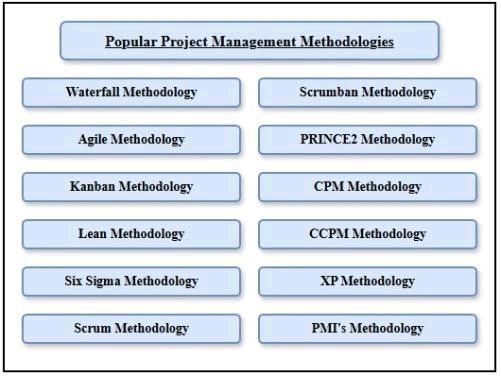
Figure 1: Project management methodologies
Agile methodology
The Agile method is a continuous procedure used to accelerate a project’s development. Agile project management uses iterations or sprints to complete assigned tasks. Sprints or iterations are brief intervals, often lasting two weeks, during which a team convenes to deliberate about the progression of a project [7]. During these sessions, responsibilities are allocated in accordance with a designated timeframe.
Agile is a concept that emphasizes the ability to quickly adapt to market changes, include external pressures such as new legislation or internal changes like leadership transitions or procedural modifications. Within the pharmaceutical sector, Agile philosophy offers flexibility in delivering value in multiple contexts, allowing for faster innovation, shorter time-to-market, and increased operational efficiency. Agile methods are being used by the pharmaceutical industry to boost innovation, reduce time to market, and increase operational effectiveness, which has resulted in major operational improvements.
Implementing Agile methodologies in pharmaceutical organizations presents certain problems. As a researchintensive sector, the workforce is predominantly comprised of highly skilled personnel used to sequential and strict methodologies [8]. The company’s culture emphasizes stability, structured tasks, and a strong emphasis towards processes. In the application of Agile techniques, automated software solutions assist organizations in establishing a stable workflow, improving communication, and visualizing various processes for both initial execution and sustained success.
Six sigma
Six Sigma is a data-driven process for continuous improvement, extensively utilized across many sectors [9]. The pharmaceutical industry is crucial to preserving the effectiveness and quality of drug manufacturing processes. Here are few factors that underscore the significance of Six Sigma in the pharmaceutical sector.
Improved quality control: Six Sigma assists pharmaceutical businesses in identifying and eradicating faults inside their processes. It enhances product quality and elevates client happiness.
Increased efficiency: Pharmaceutical firms may utilize Six Sigma to detect and eradicate waste in their operations. It results in decreased manufacturing costs, enhanced productivity, and improved profitability.
Compliance with regulations: The pharmaceutical sector is rigorously regulated, necessitating that enterprises comply with stringent requirements to guarantee product safety. Six Sigma assists organizations in adhering to these rules by offering a methodical and data-informed approach to quality management.
Better decision making: Six Sigma provides pharmaceutical organizations with the facts and insights necessary for educated decision-making. It assists organizations in enhancing decision-making, mitigating risk, and augmenting competitiveness.
Improved customer satisfaction: Pharmaceutical firms may utilize Six Sigma to provide high-quality goods that fulfil client requirements and expectations. It results in heightened consumer satisfaction and loyalty.
Lean method
Lean approach emphasizes the optimization of value via the eradication of waste and the refinement of processes, with the objective of enhancing efficiency and quality. Lean seeks to optimize efficiency by minimizing waste and concentrating on value-enhancing activities. It addresses inefficient habits (Muda), inconsistency (Mura), and excessive strain (Muri). Lean concepts can be applied in pharmaceutical manufacturing to optimize operations, save expenses, and enhance product quality, so providing a more efficient production process.
The pharmaceutical sector encounters substantial obstacles in project management owing to intricate regulatory mandates, protracted development timelines, and elevated operating expenditures. Inefficiencies in project execution, resource allocation, and risk management often result in delays, budget overruns, and failures to introduce novel pharmaceuticals to the market. Despite the examination of several project management methodologies, including Agile, Lean Six Sigma, and Waterfall, there is an absence of a standardized, flexible framework especially designed for pharmaceutical operations. This research examines the role of effective project management strategies for transforming pharmaceutical operations by mitigating inefficiencies, refining decision-making, and optimizing market access tactics. This research includes the Agile and Lean Six Sigma in pharmaceutical project management to improve the efficiency, regulatory compliance, and commercialization processes, thereby ensuring sustainable industry growth and timely access to essential medications globally.
Organization of the study
The rest of the paper is organized as follows: Section 2 Comprehensive literature review, summarizes the previous work on project management in pharmaceutical industry. Section 3 provides the detailed view of methodology, Section 4 includes the findings and analysis. The research is concluded in Section 5, which highlights the effectiveness of Agile and Lean Six Sigma methodologies in the pharmaceutical business.
Materials and Methods
In this part, we explore the existing body of research on project management strategies for transforming pharmaceutical operations. The findings and insights from prior studies are synthesized and presented, effectively encapsulating the identified research gaps.
Cyril et al., investigated that pharmaceutical companies must drive products to the market safely, quickly, and cheaply to succeed in the booming industry. The complex process of new product development, from early laboratory research to market launch, involves management in various business processes. To speed up the development process, companies must implement project management, identify risks, and develop effective risk mitigation plans. This not only supports the success and profitability of pharmaceutical companies but also makes medical discoveries available sooner and at lower costs, supporting human health and improving global quality of life.
SHELEMO explored the importance of technical expertise in Pharmaceutical Project Management (PPMs) to avoid project failure and achieve success [10]. Ten individuals from different backgrounds took part in the qualitative exploratory case study. Research and development and medical affairs PPMs both reaped the benefits of technological knowledge, but it was not required. Medical affairs PPMs prioritized communication skills above scientific competence, but R&D PPMs did not. According to the research, a multidisciplinary team is required to finish the project. Future research could explore the impact of AI integration on job satisfaction among R&D and medical affairs PPMs.
Rajabi et al., examined the design of a pharmaceutical supply chain network in the context of pandemic disruption, using an innovative bi-objective mathematical model. Conventional supply chain management solutions often prove inadequate during abrupt interruptions, highlighting the need for the establishment of robust systems. This methodology aims to minimize economic costs and shortages as main goals, specifically tackling the difficulty of abrupt increases in demand for medications. The study employed a scenario-based, discrete, and linear modeling strategy, solving the model using goal-planning tools and demonstrating its effectiveness using numerical examples. Furthermore, this study performs a case study in the metropolitan region of Mashhad, thereby illustrating the applicability and efficacy of methodology [11].
Ellis Wilson explained project management in Contract Research Organizations (CROs), focusing on its importance in drug development [12]. An examination of industry standards was conducted in 2001 by the Project Management Institute’s Pharmaceutical Special Interest Group, and the results were, used to analyze project managers’ academic preparation, training, experience, and the project management environment. The study examined responsibilities, scope of work, and knowledge areas, with communication, cost, and scope being the top priorities. The results revealed significant differences in project management practices in CROs.
Project management methodologies in pharmaceutical operations
Azanha et al., aims to examine the advantages of the Agile Project Management (APM) framework in contrast to the classic waterfall approach, and to elucidate how it may assist firms in enhancing value and achieving competitive advantage [13]. The approach that was used exploratory qualitative research via a case study of a software project that was carried out using the Scrum framework inside an IT effort for the pharmaceutical industry. Increased employee satisfaction and motivation, better requirement management, and noticeably better system quality were all benefits of using the agile framework, which added value to the company. The findings demonstrate the effectiveness of the agile framework and Scrum in particular as project management techniques. The implementation of the agile framework yielded advantages, including enhanced motivation and employee happiness, improved management of requirements, and notably superior quality of the provided system, hence creating additional value for the firm.
Journal and Science evaluated that the data and information volume make manual processing impractical [14]. Processing enormous amounts of data requires a fast computing and data delivery technology. In addition to electronics and software, Dila Farma Pharmacy employs manual methods to compute drug sales, including recording pharmaceutical prices in a ledger. This manual method is time-consuming and errorprone. This study aims to create a web-based application (Waterfall approach) to handle medication data and provide Dila Farma Pharmacy’s pharmaceutical information.
George and George effectively combined Lean and Six Sigma for business process improvement, asserting that this integrated methodology surpasses the use of Lean or Six Sigma alone [15]. He said that Lean lacks the necessary expertise to tackle intricate problems requiring sophisticated statistical methods and extensive data analysis. Lean and Six Sigma focus on enhancing corporate production and efficiency by eliminating waste and minimizing variation, respectively.
Byrne et al., investigated a case study on the implementation of advanced Lean Six Sigma problem-solving in a pharmaceutical manufacturing site producing acetaminophen tablets [16]. The study aimed to reduce downtime and improve product quality while minimizing productivity losses. Nonvalue- adding tasks were identified and eliminated using the integrated Lean Six Sigma approach. The results showed that Lean Six Sigma methodology and tools are effective for identifying root causes of problems and enabling continuous improvement.
Sharma et al., assessed that Six Sigma is a statistical concept that helps define problems, measure and analyze influential factors, identify improvements, and maintain gains over time [17]. The DMAIC and DMADV submethods are its two components. Regulatory affairs experts are vital in the pharmaceutical industry for developing new products and communicating with regulatory bodies such as the FDA. Six Sigma is a cornerstone philosophy for leading corporations, generating substantial business returns and fostering a culture of learning and sharing.
da Silva et al., investigated the use of Lean Six Sigma in Brazil’s pharmaceutical industries. Interviews with managers revealed that Lean manufacturing tools are more commonly used than Six Sigma [18]. The study also identifies the distinctive features of the pharmaceutical sector that impact Lean Six Sigma’s advantages. The findings contribute to theoretical and empirical knowledge about Lean Six Sigma implementation and improvement in the Brazilian pharmaceutical industry.
Bhargava explored that the Agile development model is increasingly being used in the pharmaceutical industry for software development [19]. Several pharmaceutical companies are using Agile in their software projects, compared to traditional methodologies like the Waterfall process. However, conflicts of interest, such as FDA regulations, must be considered. Agile’s division methodologies provide the pharmaceutical industry’s iterative approach more adaptability. Metrum Research Group, a recent customer, is using the Agile methodology to create a web scraper for analyzing and gathering data from the drug development process. The unique nature of Agile software development in the pharmaceutical industry is transforming the biomedical industry as a whole.
Narola stated that economic growth has significantly impacted pharmaceutical organizations’ operations in clinical trials [20]. To improve customer experience and reduce production costs, organizations should create active participation forums and reduce reworking chances. Traditional waterfall methodology, which did not allow for proper correction, is still used today. This results in increased costs and reduced client satisfaction. The development of efficient and economical clinical trial procedures has been greatly aided by the use of agile methodology. This paper aims to demonstrate its effectiveness in clinical trial establishment.
A.K., examined the Waterfall technique in project management, emphasizing its framework, benefits, drawbacks, and continued significance in some sectors [21]. The Waterfall model is distinguished by its continuous and linear structure, is extensively used in domains requiring meticulous planning, documentation, and adherence to regulatory standards, including construction, aerospace, and governmental projects. Notwithstanding the emergence of Agile, which provides more flexibility and adaptation, Waterfall continues to be vital in contexts where predictability and control are paramount. This study analysed how Waterfall’s rigid phase-based methodology advantages projects that need a transparent, well documented process, particularly when deviations incursignificant costs. The essay also examined new hybrid models that integrate Waterfall’s predictability with Agile’s flexibility to more effectively manage unpredictable project situations.
Hegde explored the use of Kanban in the healthcare industry to reduce medical errors, based on review articles and a survey of healthcare providers [22]. The findings suggested further investigation into Kanban’s applications in reducing healthcare errors, highlighting the need for continuous process improvement in clinical and non-clinical sectors.
Pokharkar et al., the statistical phrase “six sigma” refers to process standard deviation that emphasizes management, design/redesign, and process improvement [23]. It is a disciplined process aiming for near-perfect products and services, measuring quality based on customer expectations. Due to market pressures, more pharmaceutical industries are adopting Six Sigma strategies.
Damij and Damij, Kanban is an agile methodology that emphasizes process and project improvement through the use of fundamental techniques such as flow management, work-in-progress limitation, and workflow visualization [24]. Setting sensible work-in-progress limitations, however, is a significant challenge when implementing Kanban into practice. This article attempts to solve this problem by demonstrating that workflow depends not just on work-in-progress restrictions but also on finding out how Work-in-progress restrictions, resource capacity, and replenishment value need to be connected. This method minimizes idle time and work item queues to provide a sustained workflow pace.
Additionally, the supply chain is a crucial part of the pharmaceutical distribution network, and significant efforts are made to improve the network as a whole.
Supply chain operations include the transformation of natural resources, raw materials, and components into a finished product for customer delivery [25]. In the current competitive landscape, successful firms are those adepts at surmounting supply chain constraints. Coordinating complicated material and information transfers across firms necessitates the synchronization of the related operations [26]. The theoretical underpinnings of this study mostly arise from supply chain issues, resulting in a novel perspective in the discipline.
The pharmaceutical industry faces a significant project management maturity gap compared to other industries, making it crucial for project managers to be adaptive and adaptable [27]. Designed a project management system for small molecule drug development efforts, focusing on decision-making processes. A discussion of existing project management systems was conducted to identify methodologies. If a general drug development process is established and a project management methodology developed, project managers can develop the necessary knowledge and skills to lead complex pharmaceutical R&D projects.
Papalexi et al., discussed the implementation of the Lean kanban system within the Pharmaceutical Supply Chain (PSC) in Greece [28]. This case study, which concentrated on cooperative pharmacists, demonstrated the advantages and difficulties of this method. Field-based action research was used to test the study questions. The report contributes to the discussion of how to evaluate lean maturity in the healthcare industry. The findings suggest that adopting the kanban system improves service quality and offers a basis for operational change, allowing organizations to shift towards improved logistics strategies.
Berrado, advances in information and communication technology enable firms to share inventory data, enabling the management of multi-echelon supply chains [29]. Coordination is crucial, especially for critical items like pharmaceuticals. Kanban systems can be used to maintain necessary quantities at different levels, but require good information sharing. This paper explored the use and tailoring of a Kanban system for managing multi-echelon inventory in a pharmaceutical supply chain.
Bevilacqua et al., explored the importance of quick changeovers in a pharmaceutical company’s packaging line. Lean principles may be used to increase equipment effectiveness by 25% and decrease batch change and changeover time by 50% [30]. The study developed an integrated setup reduction using a case study strategy that made use of TPM indices, SMED, SIPOC, Kanban, and 5S approaches. The approach optimizes processes and reduces changeover times.
Heiko Gebauer evaluated that the pharmaceutical industry is facing increased market rivalry and growth rates, putting pressure on operational performance [31]. Lean manufacturing practices like TPM, JIT, TQM, and HRM are gaining attention. However, existing literature on their impact on operational performance is limited. The research indicates that plant size and firm type affect adoption, whereas lean approaches enhance operational effectiveness, indicating a positive correlation with overall company performance.
Research gap
Despite comprehensive research on project management approaches within pharmaceutical operations, significant gaps persist. Existing research mostly emphasizes individual techniques such as Agile, Waterfall, Lean Six Sigma, and Kanban; nevertheless, there is an absence of thorough study comparing their efficacy in pharmaceutical project execution. Moreover, while research underscores the importance of project management in reducing costs, improving quality, and ensuring regulatory compliance, there is less empirical data examining their direct relationship with project timeframes and overall efficiency. The significance of cross-functional cooperation in pharmaceutical project management is recognized, but its quantifiable effect on project success and regulatory compliance remains unexplored. Moreover, the majority of research focus on conventional project management frameworks, neglecting the incorporation of new trends like AI, digital transformation, and hybrid techniques. The pharmaceutical industry’s distinct regulatory and operational restrictions need a customized project management framework; yet, existing literature does not provide a structured model that effectively matches techniques with industry-specific difficulties. Future research should concentrate on creating a standardized, flexible framework that integrates diverse project management approaches with the specific requirements of pharmaceutical operations, so assuring increased efficiency, regulatory compliance, and superior project results.
In addition, this study developed a more strategic and data-informed methodology for improving efficiency, compliance, and outcomes in pharmaceutical project management.
This study employed quantitative research approach to explored Role of effective project management strategies in transforming pharmaceutical operation. In this study we consider 12 different methodologies’, The study focuses on Agile, Lean, and Six Sigma due to their substantial impact on pharmaceutical sector decision-making, project success, quality and regulatory compliance, timeliness and cost, and efficiency.
Research design
This study employs a quantitative research approach, employing statistical and empirical analysis to assess the influence of project management techniques such as waterfall methodology, Agile methodology, Kanban methodology, Lean methodology, six sigma methodology, Scrum methodology, Scrumban methodology, PRINCE2 methodology, CPM methodology, CCPM methodology, XP methodology, PMI’s guide methodology in these 12 methodologies we considered 3 methods like Agile, Lean, Six sigma. The research investigates how these techniques facilitate cost reduction, quality assurance, and regulatory compliance in pharmaceutical operations. The bellow mention is the implementation of methods which we are considered in the study.
Agile implementation emphasizes flexibility and rapidity. Agile methods include sprint planning, iterative development, daily stand-ups, and feedback loops. These enable speedier decision-making and agility to regulatory changes and project uncertainty. Automatic tools monitor project progress and improve stakeholder communication. Agile is anticipated to speed up innovation and optimize processes, reducing project delays and expense.
The use of lean methodology aims to maximize resource usage and eradicate inefficiencies. The 5S technique, which arranges workspaces to reduce waste, standardized processes, value stream mapping, and continuous improvement (Kaizen) are used to do this. Lean makes ensuring pharmaceutical initiatives run as efficiently as possible while maintaining high levels of quality.
The Six Sigma process is used to achieve quality control and regulatory compliance. The research employs the DMAIC (Define, Measure, Analyze, Improve, Control) paradigm to identify critical difficulties, assess process performance, and investigate the core causes of inefficiencies.
Conceptual frame work
This study’s conceptual framework defines the relationship between important performance outcomes in pharmaceutical operations and project management approaches. This analysis investigates three principal strategies Agile methods, Lean and Six Sigma, and Cross-functional Collaboration and their individual effects on operational efficiency. The paradigm posits that Agile techniques (H1) affect timelines and costs, Lean and Six Sigma (H2) improve quality and regulatory compliance, and Cross-functional Collaboration (H3) helps project success and decisionmaking. This framework offers a methodical way to examining how various project management methodologies enhance pharmaceutical processes, guaranteeing cost efficiency, compliance with regulations, and informed strategic choices as shown in the Figure 2.
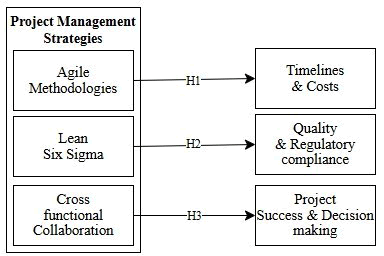
Figure 2: Conceptual frame work
Sample selection
The study sample included 500 experts in the pharmaceutical industry, from whom a final group of 341 respondents was chosen for analysis, guaranteeing a representative dataset. A stratified sampling strategy was used to ensure the representation of several critical occupations within the business. The requirements for participant selection encompassed professionals possessing a minimum of three years of experience in pharmaceutical project management, individuals actively engaged in project execution, regulatory compliance, or Research and Development (R&D), and respondents with practical experience in at least one of the three project management methodologies being examined-Agile, Lean, or Six Sigma.
Data collection
The study employs a quantitative approach, using standardized data gathering procedures to guarantee accuracy and dependability. The primary data collecting approach included a structured questionnaire aimed at gathering insights into the influence of Agile, Lean, and Six Sigma methods on project efficiency, expenses, timelines, and regulatory compliance. The questionnaire has three main variables: Agile methodology, Lean methodology, and Six Sigma methodology. Each variable is assessed via five meticulously crafted statements to provide a thorough evaluation of their impact on pharmaceutical project management. Participants were requested to convey their views using a Likert scale, assessing their degree of agreement on critical project management elements like deadline adherence, risk management, regulatory compliance, and decision-making efficiency. The questionnaire was sent electronically via email to maximize response rates and facilitate participant convenience.
Measures
Data has been gathered with the help of a structured questionnaire. Questionnaire has been prepared using Likert type scale where respondents will be asked to share their opinions regarding various research questions under study. Questionnaire has a set of both open ended and closed ended questions. Questions have been carefully crafted so as to gather meaningful information with respect to identified research variables. There are five categories of respondents in the survey and a separate questionnaire has been designed for each category of respondents. The bellow mention Table 1 show variables and no. items considered for the study.
| Variable | Number of items | Source of adoption |
| Agile methodology | 5 | Laureani, 2021; Shah, 2017 |
| Lean methodology | 5 | Nenni et al., 2014 |
| Six sigma methodology | 5 | Conference, 2010; Byrne et al., 2021 |
Table 1: Number of variables and items in the study
Data analysis
The gathered data was analyzed using SPSS software, using regression analysis to examine the correlations between project management methodologies and essential performance metrics. The statistical approaches that were employed included regression analysis.
Results
This chapter examines insights derived from data collected in the pharmaceutical industry, focusing on the influence of structured project management methodologies on improving project performance as shown in the Table 2.
| Variables and statements | Mean |
| Agile methodologies | |
| Agile project management improves project adaptability and reduces delays | 3.9238 |
| Lean Six Sigma methodologies enhance efficiency and minimize project costs | 3.912 |
| Digital transformation improves project tracking and decision-making | 3.739 |
| AI-powered predictive analytics assist in forecasting project completion timelines | 3.7361 |
| Automation tools reduce administrative delays in pharmaceutical projects | 3.6774 |
| Lean Six Sigma methodologies | |
| Risk management strategies proactively identify potential project risks | 3.6686 |
| AI-driven compliance monitoring improves adherence to FDA, EMA, and GMP standards | 3.8915 |
| Contingency planning reduces disruptions in regulatory approval processes | 3.8915 |
| Standardized Operating Procedures (SOPs) ensure high-quality pharmaceutical outcomes | 3.915 |
| Real-time risk tracking enhances regulatory compliance within pharmaceutical projects | 3.6774 |
| Cross-functional collaboration | |
| Cross-functional collaboration improves communication between R&D, regulatory, and manufacturing teams | 3.6569 |
| Digital collaboration tools enhance alignment among project teams | 3.9648 |
| A well-structured PMO (Project Management Office) improves project coordination | 3.3666 |
| Stakeholder engagement facilitates smoother regulatory approvals | 3.8211 |
| Knowledge-sharing platforms contribute to overall pharmaceutical project success | 3.6422 |
Table 2: Structured project management methodologies
The study examines the impact of Agile, Lean, and Six Sigma approaches on efficiency, cost management, quality control, and compliance with regulations. Empirical data indicates that Agile techniques augment project flexibility and diminish delays, while Lean and Six Sigma advocate for operational efficiency and adherence to rules. The study emphasizes the importance of cross-functional collaboration in enabling informed decision-making and achieving project success. Statistical study demonstrates that the use of organized project management methodologies results in quantifiable enhancements in pharmaceutical project execution, underscoring the necessity for contemporary frameworks within the business.
Hypothesis implementation
H1: Present-day project management practices have a massive impact on the timelines and costs of pharmaceutical activities.
Table 3 exhibits the model summary table illustrates the regression model’s fit quality in predicting the impact of Agile methodologies on timelines and costs in pharmaceutical operations. The relationship between agile techniques and the dependent variable is fairly favorable, shown by a R value of 0.542. Agile methodologies account for about 29.4% of the variation in costs and timelines, as shown by a R Square value of 0.294. Similar to R Square, the Adjusted R Square of 0.292 assesses the model’s reliability while considering the quantity of predictors. The standard error of the estimate, valued as 0.67418, quantifies the average discrepancy between the actual values and the regression line, serving as an indicator of prediction accuracy.
| Model R | R Square | Adjusted R square | Std. error of the estimate |
| 1 .542a | 0.294 | 0.292 | 0.67418 |
| Note: a. Predictors: (Constant), Agile methodologies | |||
Table 3: Model summary
The ANOVA table determines the statistical significance of the regression model. The regression sum of squares (64.206) denotes the variation in timelines and costs attributable to agile methodologies, whereas the residual sum of squares (154.081) signifies the unexplained variance. The F-statistic (141.263), accompanied by a very significant p-value (Sig.=0.000), indicates that the model is statistically significant. i.e., Agile Methodologies have a considerable influence on timelines and costs in pharmaceutical operations as shown in Table 4.
| Model | Sum of squares | df | Mean square | F | Sig. |
| Regression | 64.206 | 1 | 64.206 | 141.263 | .000b |
| Residual | 154.081 | 339 | 0.455 | ||
| Total | 218.288 | 340 | |||
| Note: a. Dependent variable: Timelines and costs, b. Predictors: (Constant), Agile methodologies | |||||
Table 4: Agile methodologies and its influence on timeline and costs in pharmaceutical operations
The coefficients table illustrates the intricacies of the link between Agile methodologies and timelines and costs as in Table 5. The intercept value (constant) (1.295, p=0.000) is the expected timelines and costs score if Agile methodologies do not exist. The coefficient for Agile methodologies (0.638, p=0.000) tells us that for every unit of rise in Agile methodologies, timelines and costs rise by 0.638 units. The Beta value (0.542) is the standardized effect, which indicates that Agile methodologies have a moderate positive effect. The extremely significant p-value (0.000) indicates that Agile methodologies are a good predictor of timelines and costs.
| Unstandardized coefficients | Standardized coefficients | ||||
| Model | B | Std. error | Beta | t | Sig. |
| (Constant) | 1.295 | 0.205 | 6.306 | 0 | |
| Agile methodologies | 0.638 | 0.054 | 0.542 | 11.885 | 0 |
| Note: a. Dependent variable: Timelines and costs | |||||
Table 5: Agile methodologies-as a predictor
H2: Project management strategies significantly impact the quality and regulatory compliance of pharmaceutical products.
The model summary Table 6 delineates the results of the regression study, namely the extent to which the dependent variable (quality and regulatory compliance) is elucidated by the independent variable (Lean Six Sigma). There exists a substantial positive correlation between Lean Six Sigma and quality and regulatory compliance (R=0.796). The R Square value of 0.634 indicates that Lean Six Sigma explains about 63.4% of the variation in quality and regulatory compliance. The Adjusted R Square score (0.633), which considers the number of predictors in the model, indicates that the explanatory power remains stable. The standard error of the estimate (0.49214) is the average deviation of the observed values from the regression line, reflecting the model’s fit.
| Model R | R square | Adjusted R square | Std. error of the estimate |
| 1 .796a | 0.634 | 0.633 | 0.49214 |
| Note: a. Predictors: (Constant), Lean Six Sigma | |||
Table 6: Lean Six Sigma-quality and regulatory compliance
The overall significance of the regression model is evaluated using the ANOVA Table 7. The regression’s sum of squares (142.175) accounts for the variability in quality and regulatory compliance attributed to Lean Six Sigma. Unaccounted-for volatility in the model is represented by the sum of squares owing to residuals (82.107). The sum of squares total (224.282) is the combination of explained and unexplained variations. The F-statistic (587.008) is very large, validating that Lean Six Sigma has significant effects on quality and regulatory compliance. The p-value (.000) is below the 0.05 threshold, indicating that the association is statistically significant and that Lean Six Sigma is a substantial predictor of quality and regulatory compliance.
| Model | Sum of squares | df | Mean square | F | Sig. |
| Regression | 142.175 | 1 | 142.175 | 587.008 | .000b |
| Residual | 82.107 | 339 | 0.242 | ||
| Total | 224.282 | 340 | |||
| Note: a. Dependent variable: Quality and regulatory compliance, b. Predictors: (Constant), Lean Six Sigma | |||||
Table 7: Lean Six Sigma-significance of regression model
The coefficients table provides a clear interpretation of the relationship between Lean Six Sigma and quality and regulatory compliance. The constant (intercept) is 0.724, suggesting that where Lean Six Sigma is absent (value of zero), the baseline level of quality and regulatory compliance is 0.724. Lean Six Sigma’s B (unstandardized coefficient) is 0.818, suggesting that quality as well as regulatory compliance rise by 0.818 units for every unit of Lean Six Sigma implementation. Lean Six Sigma’s proportionate contribution is shown in its beta (standardized coefficient) of 0.796, indicating that it is a reliable predictor. The significantly high t-value of 24.228 further supports the predictor’s statistical significance as shown in the Table 8. The p-value (.000) demonstrates that Lean Six Sigma has a very significant impact on both quality and regulatory compliance.
| Unstandardized coefficients | Standardized coefficients | ||||
| Model | B | Std. error | Beta | t | Sig. |
| (Constant) | 0.724 | 0.125 | 5.77 | 0 | |
| Lean Six Sigma | 0.818 | 0.034 | 0.796 | 24.228 | 0 |
| Note: a. Dependent variable: Quality and regulatory compliance | |||||
Table 8: Relationship between Lean Six Sigma, quality and regulatory compliance
H3: Cross-functional collaboration improves pharmaceutical project outcomes.
In Summary, model illustrates that cross-functional cooperation as well as pharmaceutical project success decision-making are related. The dependent variable (project success decision-making) as well as the predictor variable (cross-functional collaboration) have a substantial positive link, shown by a correlation coefficient (R) of 0.655. According to the R Square (0.429), cross-functional cooperation accounts for 42.9% of the variation in project success decision-making. The Adjusted R Square (0.427) offers a more accurate measure of the model’s explanatory power by including degrees of freedom. The standard error of estimate (0.55887) quantifies the model’s prediction accuracy as the average deviation between observed values and the regression line.
The ANOVA Table 9 evaluates the statistical significance of the regression model.The model is highly significant, shown by a p-value of 0.000 and an F-statistic of 254.523, with cross-functional collaboration being pivotal in decisionmaking about project success. The model’s capacity to account for variation is shown by the regression sum of squares (79.498), however its failure to elucidate variance is reflected in the residual sum of squares (105.884). Sum of squares equals the total variance for the dependent variable (185.382). The significance value (p=0.000) indicates that cross-functional collaboration has a substantial impact on project success, which is less than 0.05.
| Model | Sum of squares | df | Mean square | F | Sig. |
| Regression | 79.498 | 1 | 79.498 | 254.523 | .000b |
| Residual | 105.884 | 339 | 0.312 | ||
| Total | 185.382 | 340 | |||
| Note: a. Dependent Variable: Project Success Decision making, b. Predictors: (Constant), Cross functional Collaboration | |||||
Table 9: Accuracy of model prediction
The coefficients gives particular information on the effect of cross-functional collaboration on project success decisionmaking. The constant (1.413, p=0.000) is the value of project success decision-making predicted when crossfunctional collaboration equals zero. The unstandardized coefficient (B=0.620) shows that for each one-unit rise in cross-functional collaboration, project success decisionmaking rises by 0.620 units. The standardized coefficient (Beta=0.655) also supports a strong positive effect of crossfunctional collaboration. The t-statistic (15.954, p=0.000) demonstrates that the predictor is very important in forecasting project success decision-making. With the low standard error (0.039), the estimate is accurate and reliable.
Discussion
Project management prominence in the pharmaceutical industry and the problems it involves. It underscores that effective project execution necessitates the cooperative endeavours of team members, project managers, and senior management, guaranteeing explicit objectives, duties, and responsibility [32]. The pharmaceutical sector encounters distinct hurdles, including rigorous regulatory standards, substantial research and development expenditures, and prolonged approval durations, rendering risk management an essential component of project management. The article delineates fundamental project management elements, encompassing planning, risk management, communication, and cost control, which are vital for achieving project success. Furthermore, it underscores the significance of the project management and stakeholders, efficient team communication, and well delineated business procedures in attaining project goals. The study emphasizes the necessity of using organized project management practices to improve efficiency, save costs, and manage the intricacies of pharmaceutical development. The research study Pharmaceutical R&D Project Portfolio Selection and Scheduling Under Uncertainty: A Robust Possibility Optimization Approach presents a mathematical model for optimizing the selection and scheduling of pharmaceutical R&D projects, considering technical and market uncertainties [33]. The model utilizes a riskadjusted net present value methodology with resilient possibilistic programming to assess project viability and determine optimal project selection, outsourcing strategies, and financial planning. It emphasizes the importance of structured decision-making in pharmaceutical R&D investment and demonstrates its applicability in guiding firms towards financially sustainable and strategically balanced innovation portfolios [34-36].
The research findings reveal the important role of project management practices in enhancing pharmaceutical operations, especially in the area of improving timelines, cost-effectiveness, regulatory adherence, and project success rates. The findings reveal a moderate relationship (R=0.542, p<0.001) between Agile methodologies and project timelines, revealing that Agile-based practices contribute to less project delay and improved cost-effectiveness. In the same vein, Lean Six Sigma and AI-based monitoring of compliance were significantly correlated with regulatory compliance and quality assurance (R=0.796, p<0.001), showing that organized risk management and automation help to ensure better compliance with FDA, EMA, and GMP standards. Moreover, cross-functional teamwork and stakeholder participation had a positive impact on project coordination and decision-making, which is evidenced in a high correlation with project success (R=0.655, p<0.001). The ANOVA and regression analyses validate that the implementation of these project management practices leads to quantifiable improvement in pharmaceutical project delivery. Organizations should incorporate Agile approaches, Lean Six Sigma, AI-powered compliance tools, and cross-functional collaboration structures to promote efficiency, minimize cost, and deliver regulatory success within pharmaceutical operations.
Conclusion
The research asserts that effective project management practices are important in optimizing pharmaceutical operations, regulatory adhesion, and project delivery. The findings illustrate that Agile approaches, Lean Six Sigma, and digitalization considerably enhance timelines and cost savings, with Agile methodologies accounting for 29.4% of the explanation in project timelines and costs (R=0.542, p<0.001). Parallelly, the study reveals that Lean Six Sigma, risk management, and AI monitoring for compliance drive regulatory compliance and quality assurance to a great extent with a robust positive influence contributing 63.4% towards explaining the variability in compliance success (R=0.796, p<0.001). In addition, cross-functional teamwork, computer-mediated communication technology, and formal Project Management Offices (PMOs) were found to be strong predictors of project success and decision-making effectiveness, accounting for 42.9% of the variance in project execution performance (R=0.655,p<0.001). These findings reinforce the importance of pharmaceutical companies implementing contemporary project management approaches, increasing cross-team collaboration, and taking advantage of digital tools to drive operational excellence, cost reduction, and regulation compliance. Future studies may investigate other drivers of pharmaceutical project success, including supply chain vulnerability, clinical trial automation, and enhanced AI implementations.
Acknowledgement
All authors thanks to GITAM (deemed to be) University for providing best support and co-operation for conducting this work
Conflict of Interest
All author’s state no conflict of interest.
Author’s Contribution
RA, AUV and KSR conducted the research work and wrote manuscript.
References
- G. Akhtar, Indian pharmaceutical industry: An overview, IOSR J Humanit Soc Sci, 13(2013):51–66.
- D. V. Ilin, I. V. Lazanyuk, Indian pharmaceutical market: A way towards leadership in generics, 32(2024):725–743.
- S. Ahmed, Role of project manager in pharmaceutical industry, Int J Sci Res Sci Technol, (2022):118–125.
- S. Cyril, R. N. Macedonia, S. Cyril, R. N. Macedonia, S. Cyril, et al. Igor Kikerkov Kristina Pavlovska Clinical Centre, 57(2023):23–28.
- Research and development in the pharmaceutical industry, (2021).
- An introduction to market access in the pharmaceutical industry, (2024).
- P. Bhargava, The Agile approach in pharmaceutical software development, Honors Scholar Theses, 523(2017):1–33.
- D. Karaivanov, The impact of agile in the pharmaceutical industry, (2023).
- L. Brown, Six Sigma in pharmaceutical industry explained, (2025).
- A. A. Shelemo, Pharmaceutical project management and finding the balance between PM proficiency and industry expertise: A qualitative exploratory case study, Nucl Phys, 13(2023):104–116.
- R. Rajabi, E. Shadkam, S. M. Khalili, Design and optimization of a pharmaceutical supply chain network under COVID-19 pandemic disruption, Sustain Oper Comput, 5(2024):102–111.
- E. Wilson Jr., J. McDonough, Project management as a discipline within pharmaceutical contract research organizations, (2003).
- A. Azanha, A. R. T. T. Argoud, J. B. de Camargo Junior, P. D. Antoniolli. Agile project management with Scrum, Int J Manag Proj Bus, 10(2017):121–142.
- P. Journal, O. F. Science, Farma pharmacy using waterfall method, 2(2022):1–6.
- M. L. George, M. George, Lean Six Sigma for service, McGraw-Hill, New York, (2003).
- B. Byrne, O. McDermott, J. Noonan, Applying lean six sigma methodology to a pharmaceutical manufacturing facility: A case study, Processes, 9(2021).
[Crossref] [Google Scholor] [PubMed]
- O. P. Sharma, V. Gupta, G. S. Rathore, N. K. Saini, K. Sachdeva, Six Sigma in pharmaceutical industry and regulatory affairs: A review, J Natura Conscientia, 2(2011):273–293.
- B. M. S. R. da Silva, V. A. N. de Oliveira, J. L. Magalhães, Analysis of Lean Six Sigma use in pharmaceutical production, Braz J Pharm Sci, 59(2023):1–19.
- V. Shah, The implication of Agile and traditional method as a practice in pharmaceutical industry, 29(2017).
- J. Narola, Applying the Agile mechanism in the clinical trails domain for drug development, (2018).
- A. K. S, Features of using waterfall methodologies in project management, (2024).
- J. Hegde, Can the Kanban technique reduce medical errors?, (2020).
- D. Pokharkar, V. Jadhav, S. Gholve, V. Kadam. Six sigma: Golden opportunity for pharmaceutical industry, Int J PharmTech Res, 2(2010):1160–1164.
- N. Damij, T. Damij, An approach to optimizing Kanban board workflow and shortening the project management plan, IEEE Trans Eng Manag, 71(2024):13266–13273.
- I. V. Kozlenkova, G. T. M. Hult, D. J. Lund, J. A. Mena, P. Kekec, The role of marketing channels in supply chain management, J Retail, 91(2015):586–609.
- A. Nagurney, Supply chain network economics: Dynamics of prices, flows and profits, Edward Elgar Publishing, (2006).
- R. A. Ferguson, Project management for research and development projects, Proc Aust Road Res Board, 17(1994):19–33.
- Papalexi, Bamford, Dehe, A case study of Kanban implementation within the pharmaceutical supply chain, Int J Logist Res Appl, 19(2015):239–255.
- M. M. A. Berrado, A Kanban based system for multi-echelon inventory management: The case of pharmaceutical supply chain, Proc Int Conf, (2016).
- M. Bevilacqua, F. E. Ciarapica, I. de Sanctis, G. Mazzuto, C. Paciarotti, A changeover time reduction through an integration of lean practices: A case study from pharmaceutical sector, Assem Autom, 35(2015):22–34.
- H. Gebauer, M. K., T. F, Lean management practices in the pharmaceutical industry, (2009).
[Crossref] [Google Scholor] [PubMed]
- A. R. Alla, K. T. Cherian, R. Surapaneni, S. Kumar, J. Sabbani, et al. Management of pharmaceutical project and their complications, 15(2023):2364–2367.
- A. H. Hesarsorkh, J. Ashayeri, A. B. Naeini, Pharmaceutical R&D project portfolio selection and scheduling under uncertainty: A robust possibilistic optimization approach, Comput Ind Eng, 155(2021):107114.
- I. Q. Conference, Katarina PavloviÃÂ, (2010):259–268.
- A. Laureani, Agile and Lean Six Sigma integration: A leadership framework, (2021).
- M. E. Nenni, L. Giustiniano, L. Pirolo, Improvement of manufacturing operations through a lean management approach: A case study in the pharmaceutical industry, Int J Eng Bus Manag, 6(2014):1–6.
Copyright: © 2026 Ratnakar Aryasomayajula, et al. This is an open access article distributed under the terms of the Creative Commons Attribution License, which permits unrestricted use, distribution and reproduction in any medium, provided the original work is properly cited.